About Vaginal Pessaries — A Non-Surgical Solution for Prolapse & Incontinence
A vaginal pessary is a medical device inserted into the vagina to provide internal support for pelvic organs that have prolapsed or shifted out of their normal position. When the muscles and ligaments of the pelvic floor weaken — due to childbirth, pelvic surgery, aging, or hormonal changes — the uterus, bladder, or rectum can drop into or through the vaginal canal. A properly fitted pessary provides the structural support these weakened tissues can no longer supply on their own.
Pessaries are also an effective first-line conservative treatment for stress urinary incontinence (SUI) — the leaking of urine during coughing, sneezing, laughing, or exercise — by elevating and supporting the bladder neck and urethra. For many women, a well-fitted pessary achieves clinical outcomes comparable to surgical correction, without the risks, recovery time, or permanence of surgery.
All pessaries on this page require a prescription. Please fax your prescription to (941) 488-0011. For sizing assistance, download the EvaCare Sizing Guide & Catalog or call us at 1-866-218-0902.
About EvaCare Pessaries — Medical-Grade Silicone
All pessaries in our collection are EvaCare pessaries by Personal Med — made from soft, pliable medical-grade silicone that is easier to insert and remove than firm plastic pessaries. EvaCare pessaries are white in color, making them easy to distinguish from vaginal tissue during removal and clinical examination. They can be sterilized by autoclaving, boiling, or cold sterilization — supporting both clinical and home-care use.
Pessary Types — Which Style Is Right?
Pessary selection depends on the type and grade of prolapse, the patient's anatomy, whether self-management is required, and the presence of incontinence. For detailed sizing, consult the EvaCare Catalog and your prescribing clinician.
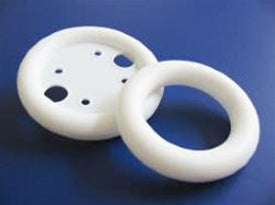
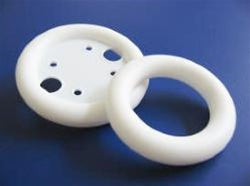
Ring Pessary
Indication: First to second degree uterine prolapse; accompanying cystocele (with support version).
Key features: Most commonly fitted pessary; folds for easy insertion; available with or without support; can assist urodynamic testing.
Sizes: 9 sizes (#1–#9), with or without support.
Oval Pessary
Indication: First to second degree prolapse; cystocele; narrow vaginal vault.
Key features: Designed specifically for narrow anatomy where a standard ring is too wide; all sizes include support.
Sizes: 9 sizes (#1–#9), with support only.
Gellhorn Pessary
Indication: Second to third degree prolapse; procidentia.
Key features: Knob folds for easy insertion; drainage holes in base; less likely to be expelled; well suited for patient self-care.
Sizes: 9 sizes (#0–#8).
Donut Pessary
Indication: Third degree prolapse; cystocele; rectocele.
Key features: Compressible for insertion; works well in a vaginal vault with little anatomic support; often used for older post-menopausal patients.
Sizes: 7 sizes (#0–#6).
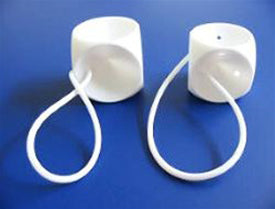
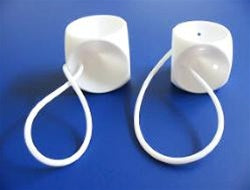
Cube Pessary
Indication: Third degree prolapse; procidentia; cystocele; rectocele.
Key features: Available with or without drainage holes; includes a silicone removal tie; versatile for small or large introitus — use cautiously.
Sizes: 11 sizes (#0–#10), with or without drainage holes.
Dish Pessary (Incontinence Dish)
Indication: Stress urinary incontinence; minor prolapse.
Key features: Provides bladder neck support; available with or without pelvic support; easy to fit; effective for SUI management.
Sizes: 8 sizes, with or without support.
Incontinence Ring & Knob Pessary
Indication: Stress urinary incontinence with or without prolapse.
Key features: Ring base with an elevated knob for urethral support; available with or without pelvic support.
Sizes: Multiple sizes, with or without support.
MarLand Pessary
Indication: Stress urinary incontinence; minor prolapse; cystocele support.
Key features: Excellent bladder neck support; available with or without pelvic support.
Sizes: 7 sizes (#2–#8), with or without support.
Pessary Selection by Prolapse Type
- First degree prolapse — Ring, Oval
- Second degree prolapse — Ring, Oval, Gellhorn, MarLand, Dish
- Third degree prolapse / procidentia — Gellhorn, Donut, Cube
- Stress urinary incontinence (no prolapse required) — Incontinence Ring & Knob, Dish, MarLand
- Cystocele (bladder prolapse) — Ring with Support, Oval, Dish, Cube, MarLand
- Rectocele (rectal wall prolapse) — Cube, Donut, Gellhorn
Sizing & Fitting
Pessary sizing is performed by a clinician during a pelvic examination. The goal is to select the smallest size that remains comfortably in place during ambulation and normal activity without causing pressure or discomfort. The EvaCare Fitting Kit — a set of six ring pessaries in graduated sizes with a cross-reference chart — assists clinicians in identifying the correct size. Ring size translates directly to the corresponding size of other pessary types using the included reference chart.
For complete size charts for every pessary type, download the EvaCare Sizing Guide & Catalog. For clinical guidance on pessary selection, consult your gynecologist, urogynecologist, or pelvic floor specialist.
Prescription Requirement
Vaginal pessaries are prescription medical devices. A valid prescription from a licensed healthcare provider is required before your order can be shipped. Please fax your prescription to (941) 488-0011. If you do not yet have a prescription, contact your gynecologist, urogynecologist, or primary care provider. Our team is available to assist at 1-866-218-0902, Mon–Fri, 9am–5pm EST.
Learn More
Why Buy From Medical Department Store?
- 30+ years serving home medical and clinical customers — A+ BBB Rated
- 110% Low Price Guarantee — we beat any competitor
- Medical supply specialists on the phone, not a call center
- Ships to all 50 states — 5 Southwest Florida locations for local pickup
Questions about pessary selection, sizing, or your prescription? Call 1-866-218-0902 — Mon–Fri, 9am–5pm EST. Prescription fax: (941) 488-0011.