

ConvaTec DuoDerm Signal Hydrocolloid Dressing — Visual Change Indicator, Tapered Edges
/


ConvaTec DuoDerm Signal Hydrocolloid Dressing — Visual Change Indicator, Tapered Edges, 8 Sizes & Shapes
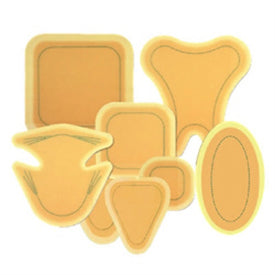
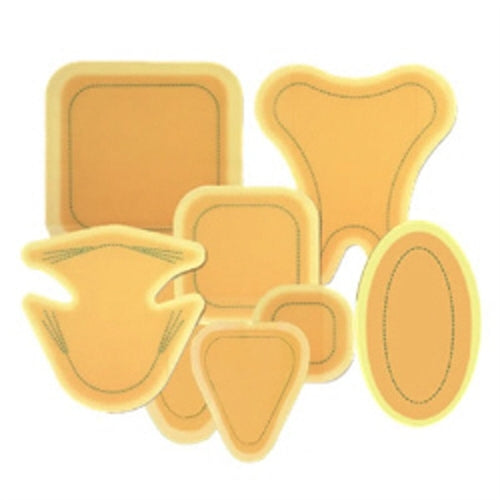
Built-in change indicator tells you exactly when to change. Tapered edges stay down longer. Thinner and more translucent than standard DuoDerm CGF — see the wound without removing the dressing. ConvaTec DuoDerm Signal is a modern, adhesive hydrocolloid wound dressing that introduces two features absent from the rest of the DuoDerm line: a visual change indicator that signals when the dressing has absorbed enough exudate to warrant a change, and a tapered edge profile that dramatically reduces the edge roll-up that leads to premature dressing failure. The result is a dressing that changes only when it needs to — not when someone guesses it should — reducing unnecessary dressing changes that disrupt the wound healing environment and cause avoidable patient pain. Thinner and more translucent than DuoDerm CGF and CGF Border, the Signal also allows visual wound monitoring through the backing without removal. Available in eight sizes and shapes — including dedicated heel, sacral butterfly, oval, and two triangle sizes — the broadest anatomical shape range in the DuoDerm line.
✔ Visual Change Indicator — Signals When Dressing Needs Changing ✔ Tapered Edges — Reduces Roll-Up, Extends Wear Time ✔ Thinner Than CGF — More Translucent, Better Wound Visibility ✔ Vapor-Permeable Film Backing — Bacterial & Viral Barrier ✔ 8 Sizes & Shapes — Heel, Sacral, Oval, Triangle & Square ✔ Latex-Free
Product Details & Available Sizes
| Manufacturer | ConvaTec |
|---|---|
| Dressing Type | Adhesive, tapered-edge hydrocolloid with visual change indicator — CGF formula |
| Change Indicator | Visual — indicator signals when absorbed exudate has reached the point where dressing change is warranted; reduces premature and delayed changes |
| Edge Design | Tapered — edges thin toward the perimeter to reduce the mechanical step-off that causes edge lift and roll-up under friction and movement |
| Profile | Thinner than DuoDerm CGF and CGF Border — improved translucency for visual wound monitoring through backing |
| Outer Backing | Flexible polyurethane film — vapor-permeable, moisture-resistant, nonstaining, easy to clean; bacterial and viral barrier (HBV, HIV) when intact |
| Adhesive Contact Layer | Proprietary ConvaTec CGF hydrocolloid — pectins, gelatins, CMC, elastomers |
| Exudate Level | Light to moderate exudate |
| Use | Primary or secondary dressing (effective secondary over Aquacel and Aquacel Ag Hydrofiber) |
| Wear Time | Up to 7 days — change when indicator signals or when clinically indicated |
| Sterility | Sterile |
| Latex | Latex-free |
| 403326 | Square — 4" x 4" — Box of 5 |
| 403327 | Square — 5½" x 5½" — Box of 5 |
| 403328 | Square — 8" x 8" — Box of 5 |
| 403332 | Triangle — 6" x 7" — Box of 5 |
| 403333 | Triangle — 8" x 9" — Box of 5 |
| 410500 | Heel — 7½" x 7¾" — Box of 5 |
| 410501 | Butterfly/Sacral — 8¼" x 8¾" — Box of 5 |
| 410510 | Oval — 4½" x 7½" — Box of 5 |
Indicated For — Wound Types & Uses
- Pressure ulcers / pressure injuries — Stage I and Stage II; prevention of skin breakdown on at-risk surfaces
- Dermal ulcers — venous leg ulcers, arterial ulcers, diabetic foot ulcers with light-to-moderate exudate
- Superficial wounds — abrasions, minor lacerations, skin tears
- Partial thickness burns
- Donor sites
- Primary dressing for light-to-moderately exuding wounds requiring a moist healing environment
- Secondary cover dressing over Aquacel and Aquacel Ag Hydrofiber primary dressings
- Hard-to-dress anatomical locations — heel, sacrum, elbow, trochanter — where dedicated anatomical shapes reduce edge lift and dressing loss
Not indicated for: Moderately-to-heavily exudating wounds — for higher drainage wounds, DuoDerm CGF, CGF Border, or a foam or alginate dressing is more appropriate. Not for infected wounds without clinical management. Not for third-degree burns.
The Change Indicator — How It Works and Why It Matters
The most common error in hydrocolloid wound management is changing the dressing at the wrong time — either too early because the outer surface looks saturated or discolored, or too late because no one is sure whether the dressing has reached its capacity. Both errors have clinical consequences. Premature dressing removal disrupts the wound healing environment, disturbs the forming granulation tissue at the wound surface, and causes avoidable patient pain. Delayed changing allows a saturated dressing to leak exudate onto the periwound skin, creating the maceration and skin breakdown that makes the wound harder to heal.
DuoDerm Signal solves this problem with a built-in visual change indicator. As the CGF hydrocolloid layer absorbs wound exudate and converts to a gel, the gel mass grows outward toward the dressing edge. The change indicator is a visible boundary zone within the dressing that becomes visible through the translucent film backing as the gel mass approaches the dressing margin — signaling that the dressing has absorbed a significant volume of exudate and is approaching its useful capacity. When the indicator signal appears, it is time to change. Before it appears, the dressing should remain in place regardless of surface appearance. This simple visual signal removes clinical guesswork from the dressing change decision and produces the same discipline in dressing timing that expensive electronic monitoring systems attempt to provide — through a passive, zero-cost visual cue built directly into the dressing.
- Change indicator appears as gel mass approaches dressing margin — visible through translucent film backing
- No indicator signal = dressing stays; indicator signal = time to change
- Eliminates guesswork — reduces both premature and delayed dressing changes
- Reduces patient discomfort — fewer unnecessary dressing removals
- Reduces cost — maximum useful wear time per dressing before change
- Reduces wound disruption — granulation tissue and wound surface remain undisturbed until change is actually warranted
Tapered Edges — Why They Reduce Roll-Up and Extend Wear Time
Standard hydrocolloid dressings have a consistent thickness profile from center to edge — the full-depth hydrocolloid pad terminates in a squared-off edge that creates a visible step in height between the dressing and the surrounding skin. Under mechanical friction — from clothing, bedding, positioning changes, or body movement — this raised edge catches and peels, initiating the edge lift that progressively undermines the dressing adhesion until the dressing fails and falls off. Edge lift is the primary cause of premature hydrocolloid dressing loss, and it is particularly problematic on the high-friction surfaces where hydrocolloid dressings are most needed: sacrum, heel, elbow, and any site exposed to repeated friction from repositioning.
DuoDerm Signal's tapered edge profile eliminates the step-off entirely. The dressing thins gradually toward the perimeter — the edge feathers out to near-zero thickness at the adhesive margin, creating a smooth, flush transition between dressing and skin surface. There is no raised edge to catch friction. The result is a dressing that stays adhered significantly longer on high-friction surfaces than standard-edge hydrocolloids, and that survives body movement and repositioning without the progressive edge peeling that leads to premature failure.
- Tapered edges thin to near-zero at the perimeter — no raised edge to catch friction
- Flush transition between dressing and skin surface — reduces mechanical edge stress
- Stays adhered longer on high-friction sites — sacrum, heel, elbow, trochanter
- Survives repositioning and body movement better than standard-edge hydrocolloids
- Combined with change indicator — the dressing stays down until the indicator says it's actually time to change
DuoDerm Signal as