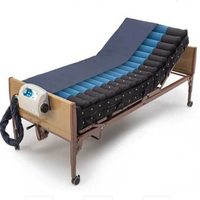
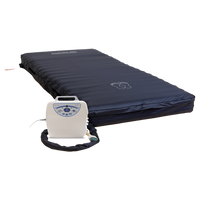
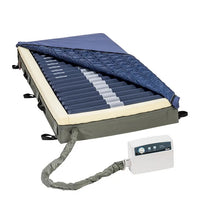
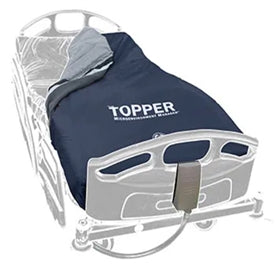
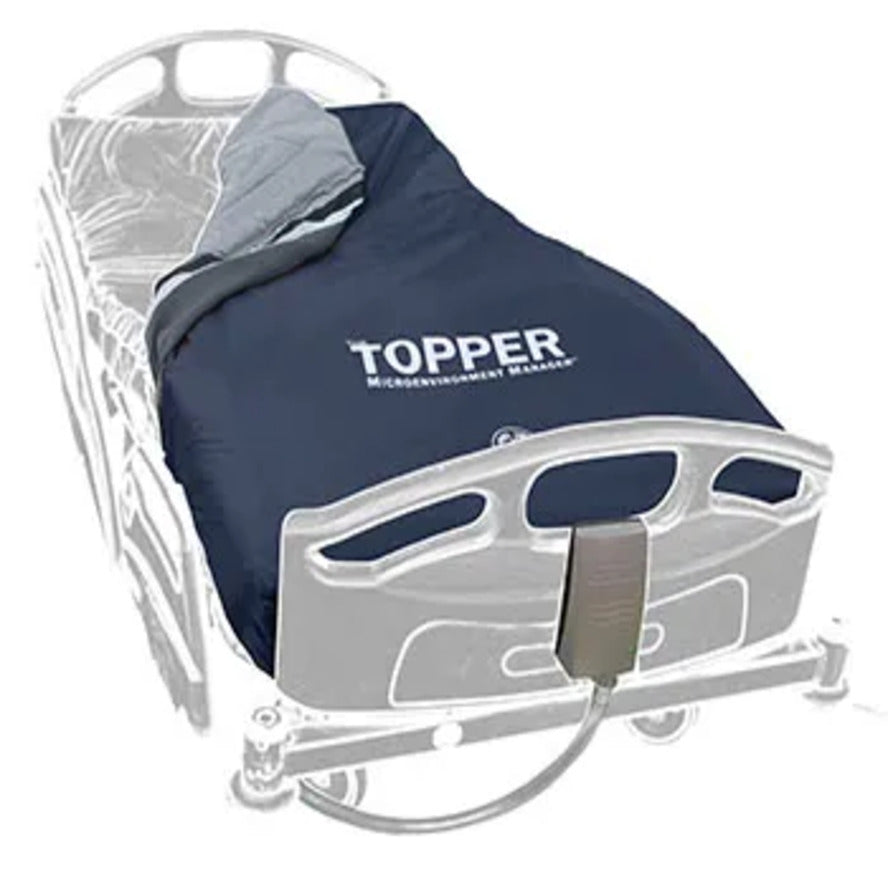
Low Air Loss Mattress Systems — Southwest Florida & Nationwide
Low air loss mattress systems are advanced powered therapy surfaces that combine alternating pressure therapy with a continuous flow of air through the mattress surface — simultaneously managing pressure redistribution and microclimate control. The airflow keeps the skin surface cool and dry, addressing two of the most critical and interrelated factors in pressure injury prevention and treatment: sustained pressure and moisture-related skin breakdown.
These systems represent the highest level of portable mattress therapy available outside of a hospital ICU, and they are indicated for patients with existing moderate to severe pressure injuries, conditions requiring active moisture management, or complex care needs that non-powered and basic alternating pressure systems cannot adequately address.
Medical Department Store carries a full range of low air loss mattress systems from leading clinical manufacturers, with specialists on staff at all five Southwest Florida showroom locations to help identify the right system for your patient's specific diagnosis and care environment.
📞 866-218-0902 | ✉ support@medicaldepartmentstore.com
How Low Air Loss Therapy Works
A low air loss system pumps a continuous, gentle stream of air through small perforations in the mattress surface. This airflow serves two clinical functions simultaneously. First, it carries heat and moisture away from the skin — maintaining a drier, cooler microclimate at the contact surface that reduces the risk of maceration and moisture-associated skin damage. Second, most low air loss systems incorporate alternating pressure cycles that continuously redistribute pressure across the body, preventing sustained loading on any single area.
The result is a therapy surface that addresses the full spectrum of pressure injury risk factors — sustained pressure, shear, friction, heat, and moisture — in a single integrated system. For patients whose skin integrity is already compromised, or whose care conditions make any one of these factors particularly difficult to manage, low air loss therapy provides a clinical safety net that no static surface can replicate.
Low Air Loss vs. Alternating Pressure — Understanding the Difference
Alternating pressure alone cycles air between cells to redistribute pressure — it is the clinical standard for moderate to high-risk patients and is effective for pressure injury prevention and treatment in most home care and long-term care settings.
Low air loss adds microclimate management on top of alternating pressure — the continuous airflow through the mattress surface actively manages temperature and moisture at the skin. This makes low air loss the appropriate choice when moisture, perspiration, or incontinence is a significant contributing factor to skin breakdown, or when a patient has a stage III or IV pressure injury where wound healing requires both pressure relief and a dry wound environment.
Not sure which level your patient needs? Our clinical team can help you evaluate. Call 866-218-0902 — this is exactly the kind of question we answer every day.
Who Needs a Low Air Loss Mattress System?
Low air loss systems are clinically indicated for patients who meet one or more of the following criteria:
- Existing stage III or IV pressure injury requiring active wound healing support
- Multiple pressure injuries across different body areas
- Conditions causing significant perspiration, moisture, or incontinence that cannot be managed with repositioning and standard skin care alone
- Limited or no ability to reposition independently
- History of failed healing on standard alternating pressure systems
- Post-surgical wounds or skin grafts requiring a protected, dry surface
- Patients with conditions affecting circulation, sensation, or skin fragility — including advanced diabetes, vascular disease, or end-stage conditions
If your patient does not yet meet these criteria, a standard alternating pressure system or therapeutic foam mattress may be the more appropriate and cost-effective choice. Our team will tell you honestly which level applies.
Southwest Florida Considerations
Low air loss systems manage heat and moisture at the skin surface — which makes them particularly relevant in Southwest Florida's climate. Patients who use powered medical equipment in non-air-conditioned spaces, on lanais, or in homes without consistent climate control will experience higher ambient temperatures that increase perspiration and thermal load on the skin. A low air loss system's active airflow compensates for environmental heat in ways that static foam and basic alternating pressure systems cannot.
Hurricane season is also a planning consideration for any patient on powered medical equipment. Low air loss systems require continuous AC power to function. If your patient is on a low air loss mattress, a power outage plan — including backup power options, DC capability, and evacuation planning — is essential before storm season. Come in to any of our five Southwest Florida locations in April or May and we will build a specific plan for your patient's equipment and situation.
Frequently Asked Questions
What is the difference between low air loss and alternating pressure?
Alternating pressure redistributes pressure by cycling air between cells — the primary mechanism for pressure injury prevention. Low air loss adds a continuous airflow through the mattress surface that actively manages heat and moisture at the skin. Most low air loss systems incorporate both therapies. The addition of microclimate management makes low air loss the appropriate choice for patients with existing moderate to severe wounds or significant moisture-related skin breakdown. 866-218-0902
Does Medicare cover a low air loss mattress system?
Medicare Part B may cover low air loss mattress systems with a qualifying diagnosis, physician documentation, and appropriate HCPCS coding. Coverage requirements are specific and documentation must be complete before a claim is submitted. We handle Medicare billing directly — call us before purchasing and we will verify your coverage and tell you exactly what documentation is needed. 866-218-0902 | support@medicaldepartmentstore.com
Can a low air loss system be used at home?
Yes — the systems in this collection are designed for home care as well as long-term care and facility use. They connect to standard household power and most operate quietly enough for overnight use. Setup requires attention to power supply, positioning, and tubing management — our team will walk caregivers through the full setup process in person at any of our five Southwest Florida locations or by phone.
What happens during a power outage?
Most full mattress replacement systems in this category include a foam base layer that provides backup support during power interruptions, reducing the risk of bottoming out if the pump loses power temporarily. However, the therapeutic airflow stops when power is lost. For Southwest Florida patients, this is a critical planning consideration — call us to discuss backup power options and hurricane preparedness for your specific system. 866-218-0902
Do you service low air loss systems you did not sell?
Yes — all brands, all models, regardless of where purchased, at all five Southwest Florida locations. Home service calls available for patients who cannot come in. 866-218-0902
Learn More
Five Southwest Florida Locations — Walk In Anytime
Clinical specialists on staff · Hands-on demonstrations · Medicare billing · Repairs for all brands · Nationwide shipping
📞 866-218-0902 | ✉ support@medicaldepartmentstore.com
Monday–Friday 9AM–5PM | Saturday 9AM–3PM | Nationwide shipping available