

Ferris PolyMem Cloth Adhesive Dressing — Silver-Free, Breathable Cloth, 5 Sizes: Strips
/


Ferris PolyMem Cloth Adhesive Dressing — Silver-Free, Breathable Cloth, 5 Sizes: Strips, Dot & Islands
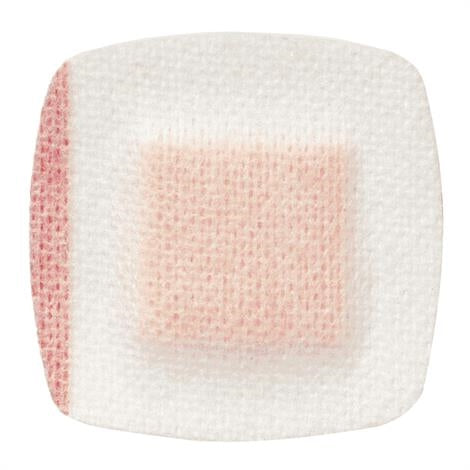
PolyMem's four-component polymeric membrane technology — continuously cleanses, fills, absorbs, and moistens — in a self-adhesive, breathable cloth-backed format. No silver. No tape needed. Five sizes across three form factors: two strip sizes for linear and narrow wounds, one dot for compact wound sites, and two island sizes for standard and larger wound coverage. Ideal for ecchymosis, skin tears, and any wound where the comfort of a cloth backing over a film border makes a meaningful difference to the patient. Ferris PolyMem Cloth Adhesive Dressings deliver the full PolyMem polymeric membrane formula — surfactant wound cleanser, glycerin moisturizer, and superabsorbent starch co-polymer — in an island format with a breathable, adhesive-coated cloth outer backing that secures directly to the surrounding skin without tape. The cloth material conforms softly to body contours and wound locations where film-backed dressings create uncomfortable rigid edges, moves with the patient through body movement without catching or peeling, and provides a gentle periwound adhesion experience that is particularly valuable for ecchymosis, skin tears on fragile skin, and wounds on high-motion anatomical locations. The PolyMem membrane pad is non-adherent — glycerin prevents wound bonding throughout the wear period for virtually pain-free removal at every change. Silver-free — for clean wounds, healing wounds, and any presentation where antimicrobial intervention is not clinically indicated. Box of 20 (strips and dot) or 15 (islands).
✔ Four-Component Polymeric Membrane — Cleanse, Fill, Absorb & Moisten ✔ Breathable Adhesive Cloth Backing — Soft, Flexible, No Rigid Edges ✔ Self-Adhesive — No Tape or Secondary Dressing Required ✔ Silver-Free — For Clean & Low-Bioburden Wounds ✔ Virtually Pain-Free Removal — Glycerin Prevents Wound Adherence ✔ Ideal for Ecchymosis & Skin Tears ✔ 5 Sizes — Strip, Dot & Island Formats
Product Details & Available Sizes
| Manufacturer | Ferris Manufacturing Corp. |
|---|---|
| Dressing Category | Polymeric membrane dressing (PMD) — not a foam; NPUAP-classified distinct category |
| Matrix | Hydrophilic polyurethane membrane containing: mild surfactant wound cleanser, glycerin moisturizer, superabsorbent starch co-polymer |
| Backing | Breathable, adhesive-coated cloth — soft, flexible, conformable; no rigid edges |
| Silver | None — silver-free (see PolyMem Silver Cloth Island 1766 for silver-containing cloth variant) |
| Adhesive | Self-adhesive cloth border — no tape or secondary dressing required |
| Use | Combined primary and secondary dressing, or as secondary dressing |
| Absorption | Up to 10× the dressing's own weight in wound exudate |
| Wear Time | Up to 7 days; change when pad is 75% saturated or wound fluid appears at any edge |
| Color | Pink — characteristic PolyMem color; normal and expected |
| HCPCS Code | A6212 (all sizes) |
| Sterility | Sterile |
| Latex | Latex-free |
Strip Formats — For Linear, Narrow & Small Wounds
| 7031 | Cloth Strip — 1"×1" pad / 1"×3" total adhesive — Box of 20 |
|---|---|
| 7042 | Cloth Strip — 2"×1.5" pad / 2"×4" total adhesive — Box of 20 |
Dot Format — For Compact Round Wound Sites
| 7203 | Cloth Dot — 1"×1" pad / 2"×2" total adhesive — Box of 20 |
|---|
Island Formats — For Standard & Larger Wounds
| 7405 | Cloth Island — 2"×3" pad / 4"×5" total adhesive — Box of 15 |
|---|---|
| 7606 | Cloth Island — 3.5"×3.5" pad / 6"×6" total adhesive — Box of 15 |
Indicated For — Wound Types
- Ecchymosis — bruising and contusions where PolyMem's pain modulation, tissue-soothing glycerin, and continuous cleansing are indicated
- Skin tears caused by friction and shear — glycerin prevents adherence to fragile tissue flaps; cloth backing prevents edge trauma on sensitized periwound skin
- Pressure ulcers — Stage I through Stage IV — clean or low-bioburden presentations
- Venous leg ulcers — clean, granulating
- Diabetic foot ulcers — non-infected
- Arterial ulcers — clean drainage
- First and second degree burns — clean
- Donor sites and graft sites
- Surgical wounds — post-operative clean incisions and healing wounds
- Traumatic wounds — lacerations, abrasions, contusions
- Wounds on high-motion anatomical locations — elbows, knees, dorsal foot, joints — where cloth flexibility outperforms film adhesive at preventing edge peel
- Wounds on elderly or fragile-skin patients where adhesive comfort and gentle removal are priorities
- Linear and narrow wounds (incisions, IV sites, pin sites) — use strip formats 7031 or 7042
- Small circular wounds or compact single-site wounds — use dot format 7203
Not indicated for: Infected or high-bioburden wounds requiring antimicrobial action — use PolyMem Silver Cloth Island (1766) or another PolyMem Silver variant. Not for heavily exuding wounds where Max capacity is required. Keep dressing dry when bathing — cloth backing is breathable but not fully waterproof.
Why Cloth — Not Film — for These Wound Presentations
PolyMem Cloth Adhesive Dressings share the same polymeric membrane formula as every other PolyMem configuration. The clinical distinction of the cloth line is entirely the backing material and what that backing does differently than polyurethane film at the wound site.
Polyurethane film adhesive dressings — including film-backed PolyMem island dressings — are waterproof, durable, and maintain an excellent bacterial barrier. The film material is dimensionally stable — it resists folding, deformation, and stretching. At the dressing border, this creates a stiff perimeter edge that stands slightly proud of the skin surface. In straightforward wound presentations on flat anatomical sites with healthy periwound skin, this edge is inconsequential. In several specific presentations, it matters substantially:
- Ecchymosis and contused tissue: Bruised soft tissue is hypersensitive — even light mechanical stimulation at the wound perimeter can cause disproportionate pain. A stiff film edge pressing and catching against bruised tissue during body movement adds a persistent mechanical irritant to an already painful presentation. The cloth border lies softly against bruised skin and flexes with the patient's movement without the catch-and-press cycle that film produces.
- Skin tears on elderly or fragile skin: The periwound skin around a skin tear is typically already compromised — the same mechanical vulnerability that caused the tear exists in the surrounding skin. A film adhesive border on that skin stiffens the interface and resists the micro-movements the skin surface makes during normal body activity; the repeated mechanical mismatch between the stiff film and the moving, fragile skin creates edge-friction that can extend the wound boundary. The cloth border moves with the skin rather than resisting it.
- High-motion wound sites: On elbows, knees, dorsal foot, and joints, the skin surface stretches and compresses repeatedly through the range of motion. Film borders resist this deformation — the film doesn't stretch with the skin, so the adhesive at the border edge is repeatedly stressed and either peels or creates a mechanical traction on the periwound skin. Cloth stretches with the motion, maintaining adhesion without creating mechanical stress at the border.
- Patient comfort preference: Cloth backing simply feels different than film against skin — softer, more textile-like, similar to a bandage strip. For patients who are self-managing wounds at home and changing their own dressings, the comfort difference between cloth and film at the wound border is meaningful to treatment adherence.
The Three Form Factors — Strip, Dot, and Island
The PolyMem Cloth line offers three distinct dressing geometries across its five sizes — each addressing a different wound shape and location profile:
Strip Format (7031, 7042): A rectangular PolyMem pad mounted on a longer rectangular cloth adhesive backing — narrow width, longer length. Strips are engineered for linear, narrow, or elongated wound presentations where an island or dot format would either over-cover the wound margins or require two overlapping dressings:
- 7031 — 1"×1" pad / 1"×3" adhesive: The smallest PolyMem cloth format. For pin sites, IV catheter sites, small suture line wounds, narrow incision sites, and any wound where an extremely compact PolyMem pad is needed on a linear configuration. Box of 20.
- 7042 — 2"×1.5" pad / 2"×4" adhesive: Wider strip for slightly larger linear wounds — longer suture lines, small lacerations, abrasions with a linear profile, post-operative incision sites of short-to-medium length. Box of 20.
Dot Format (7203): A compact 1"×1" square PolyMem pad on a 2"×2" square cloth adhesive backing — the smallest total-footprint PolyMem cloth format. The dot is designed for:
- Small circular or compact wounds — minor punctures, needle stick sites, small skin tears, blister tops, and any wound where a strip's elongated shape would create unnecessary border adhesion on healthy skin
- IV catheter and peripheral line sites — the compact 2"×2" total footprint fits catheter insertion sites cleanly without the excess border coverage of a larger island
- Pin sites for external fixation — the small pad covers the pin entry wound with minimal overlap onto periwound skin
- Ecchymosis at a compact site — contusion over a small bony prominence or joint where a strip or island would cover healthy tissue unnecessarily
Island Format (7405, 7606): The classic centered-pad island construction — PolyMem pad centered within a rectangular cloth adhesive border with equal margins on all sides. Islands are the most versatile format for standard wound presentations:
- 7405 — 2"×3" pad / 4"×5" adhesive: The standard island size — for most pressure injuries, typical skin tears, moderate ecchymosis, small-to-medium surgical wounds, and any wound falling within the 2"×3" pad coverage area. The 4"×5" cloth border provides ample adhesion margin around the pad without excessive coverage of healthy skin. Box of 15.
- 7606 — 3.5"×3.5" pad / 6"×6" adhesive: The larger island — for wounds that outgrow the 7405 pad coverage area: larger pressure injuries, extensive ecchymosis, larger skin tears, post-operative wounds of medium-to-large dimension, and wounds where the 2"×3" pad would leave wound margins uncovered. The 6"×6" total footprint provides a wide adhesion perimeter that stays secure even on high-motion sites. Box of 15.
PolyMem Cloth Adhesive vs. PolyMem Silver Cloth Island — Choosing Between Them
Both use the same breathable adhesive-coated cloth backing and the same self-adhesive island format. The distinction is silver:
- PolyMem Cloth Adhesive (this product — 7031, 7042, 7203, 7405, 7606): Silver-free. Five sizes across three form factors including strip and dot formats not available in the silver cloth line. For clean and low-bioburden wounds, healing wounds no longer requiring antimicrobial intervention, ecchymosis, skin tears, and any wound presentation where infection is not a clinical concern. More economical than the silver variant when antimicrobial action is not needed.
- PolyMem Silver Cloth Island (1766 — 6"×6" / 3.5"×3.5" pad): Same cloth backing and island format as the 7606, but with nano-crystalline reactive silver added to the membrane matrix. For infected or high-bioburden wounds where antimicrobial protection alongside the cloth comfort format is required. One size only — no strip or dot format in the silver cloth line.
Application Instructions
- For the first application — prepare the wound per wound management protocol and cleanse as indicated
- For all subsequent dressing changes — do not clean the wound or flush with saline or water; PolyMem's built-in continuous cleanser maintains wound bed cleanliness between changes without mechanical disruption of healing tissue
- Select a dressing so that the pink PolyMem membrane pad extends ¼"–½" beyond the wound margin on all sides
- Peel the release liner from the cloth adhesive border
- Apply with the film side of the PolyMem pad facing outward (away from the wound) — the membrane side contacts the wound bed
- Press the cloth border firmly against surrounding periwound skin to secure
- Keep the dressing dry when bathing — cloth is breathable but not waterproof; cover with a waterproof protector during showering or bathing if needed
- Change when the pad is 75% saturated, when wound fluid appears at any dressing edge, or as clinically indicated — do not wait for 100% saturation before changing
- A dramatic increase in wound fluid may be observed during the first few days — this is expected and indicates the PolyMem cleanser is actively drawing debris and fluid from the wound bed; do not interpret as wound deterioration
Removal: Gently lift the cloth border edge and peel the dressing away from the wound — glycerin maintains a non-adherent wound interface throughout the wear period for virtually pain-free removal. If any minor adherence occurs at the wound margin, apply a small amount of saline to the edge before lifting.
Why Buy From Medical Department Store?
- 30+ years serving home medical and wound care customers — A+ BBB Rated
- 110% Low Price Guarantee — we beat any competitor
- Medical supply specialists on the phone, not a call center
- Ships to all 50 states — 5 Southwest Florida locations for local pickup
Questions about PolyMem Cloth Adhesive or any of our wound dressings? Call 1-866-218-0902 — our team is ready to help.